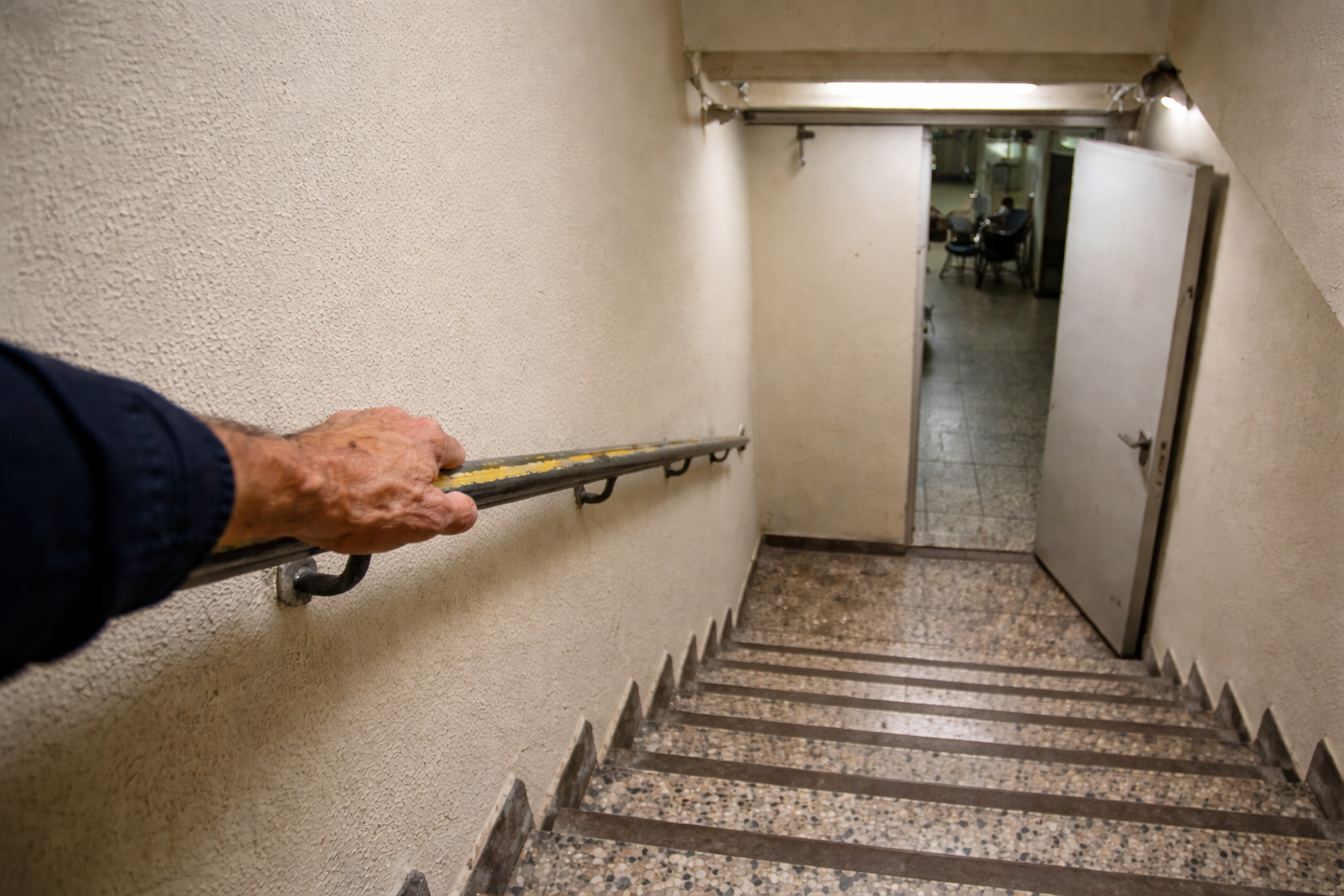
“This is the last time I’m doing this.”
A few days ago, I heard an older man say these words as he stood in front of a long flight of stairs late at night. He had already been there several times, but that night he looked overwhelmed. The stairs were long, the conditions were difficult, and he was clearly worried that he would not be able to manage them safely.
His wife tried to reassure him. She suggested that they take it slowly and go step by step.
But his voice was firm.
“I’m not doing this again.”
My heart went out to him, because his fear was completely real.
Why a fall is about more than the injury
Falls are one of the significant health concerns associated with aging. The risk of falling is influenced by a combination of factors, including reduced strength and balance, changes in vision, reduced mobility, certain medications, medical conditions and environmental hazards.
The problem is not only the fall itself. A fall can result in a fracture, head injury or other physical injury. But even when there is no serious injury, the experience can change the way a person moves through everyday life.
After a fall, someone may start thinking:
“Maybe I shouldn’t walk alone.”
“I’m not safe on stairs anymore.”
“Maybe I should avoid going out.”
And this is where a cycle can sometimes begin.
Understanding the psychology and research
Fear of falling, confidence and balance confidence: what is the difference?
Research uses several related concepts to describe how people experience the risk of falling, including fear of falling, confidence in performing activities without falling, and balance confidence.
These concepts overlap, but they are not exactly the same. A person may physically be able to climb a flight of stairs while still feeling that they cannot do it safely.
That feeling can influence behavior. Research has found associations between fear of falling, activity restriction and reduced participation in everyday activities. Reviews of exercise interventions have also found that exercise can help reduce fear of falling, although the quality of evidence varies between studies and interventions.
For example, a Cochrane review of 30 trials with 2,878 participants found that exercise probably reduces fear of falling to a small or moderate degree right after an exercise program. The quality of that evidence was low, and the effect further down the line is less certain. Separately, a larger Cochrane review of 108 trials found that exercise programs reduce the rate of falls, and here the certainty of the evidence is high.
In other words, practical work on strength and balance is well-supported for preventing falls, and it also seems to help with fear. To see practical examples of what this looks like in practice, read my guide on essential fall prevention exercises and why balance alone isn’t enough.
Fear of falling is also common. Studies report that about one in three older people with no history of falls, and about two in three of those who have fallen, report some fear of falling.
Is fear of falling “all psychological”?
This does not mean that “it is all psychological.”
Fear of falling can be a completely understandable response to feeling physically less stable, having experienced a previous fall, feeling weak or dealing with an environment that feels challenging.
The goal is not to convince someone that they “shouldn’t be afraid.” The goal is to gradually build more physical ability, experience and confidence.
How avoidance turns into a cycle
Imagine someone who feels less stable on stairs.
At first, they use the handrail. Then they only use the stairs when someone is with them. Eventually, they may start avoiding places with stairs altogether.
Over time, they may walk less, go out less and challenge their body less.
The original intention was protection. But when avoidance becomes a regular pattern, it can reduce opportunities to practice the abilities needed for independent movement.
Less movement can be associated with reductions in strength, fitness and physical function, potentially creating a cycle of reduced confidence and reduced activity.
That is why fall prevention is not only about “being more careful.” It is also about asking: How can we build more capacity?
Rebuilding confidence through movement
When training changes how people see themselves
One of the interesting things about working with older adults is that the changes are not always purely physical.
When someone trains in a way that is appropriate for their current ability, they may discover things they did not realize they could still do:
“I thought I couldn’t get up without using my hands.”
“I was afraid to step up.”
“I didn’t think I could walk like that.”
These experiences can contribute to a greater sense of self-efficacy and confidence in movement. They do not guarantee that fear will disappear, but they can provide new experiences of ability and successful movement.
How I work with fear of falling
When I work with older adults on this, the practical work and the confidence work happen together. We build strength and balance with exercises matched to the person’s current ability, and we progress gradually so that every step is a real experience of success, not a test. The aim is that people will begin to trust their body again.
I also talk with people about the fear itself: what they have started to avoid, what they are worried will happen, and what they would like to be able to do again.
If you want to practice this safely from home, you can check out my online training programs for older adults designed to build confidence step by step.
Keep living, moving and doing what matters
I don’t want older adults to move through the world constantly afraid of falling.
I want them to keep using their bodies: climbing stairs, getting up from the floor, walking outside, traveling, leaving the house and being able to respond when everyday life becomes physically demanding.
Fear of falling is a natural response, particularly after a fall or when physical ability has changed. But it does not have to be what controls movement.
Strength can be trained. Balance can be challenged. Functional movement can be practiced. Confidence can be built gradually.
Because the goal is not simply not to fall. The goal is to keep living, moving and doing the things that matter — with as much freedom and confidence as possible.
Frequently asked questions
Is it normal to be afraid of falling?
Yes. It is common, particularly after a fall or when your body feels less stable than it used to. Fear is a natural response, and it deserves to be taken seriously rather than dismissed.
Can exercise reduce fear of falling?
Research suggests that it probably can, to a small or moderate degree, although the quality of the evidence is low. Exercise also reduces the rate of falls, which is supported by high-certainty evidence.
When should I start paying attention?
You do not have to wait for a fall. Difficulty getting up from a chair, feeling unstable while walking, avoiding stairs or going out less are all good reasons to start building strength and confidence now.