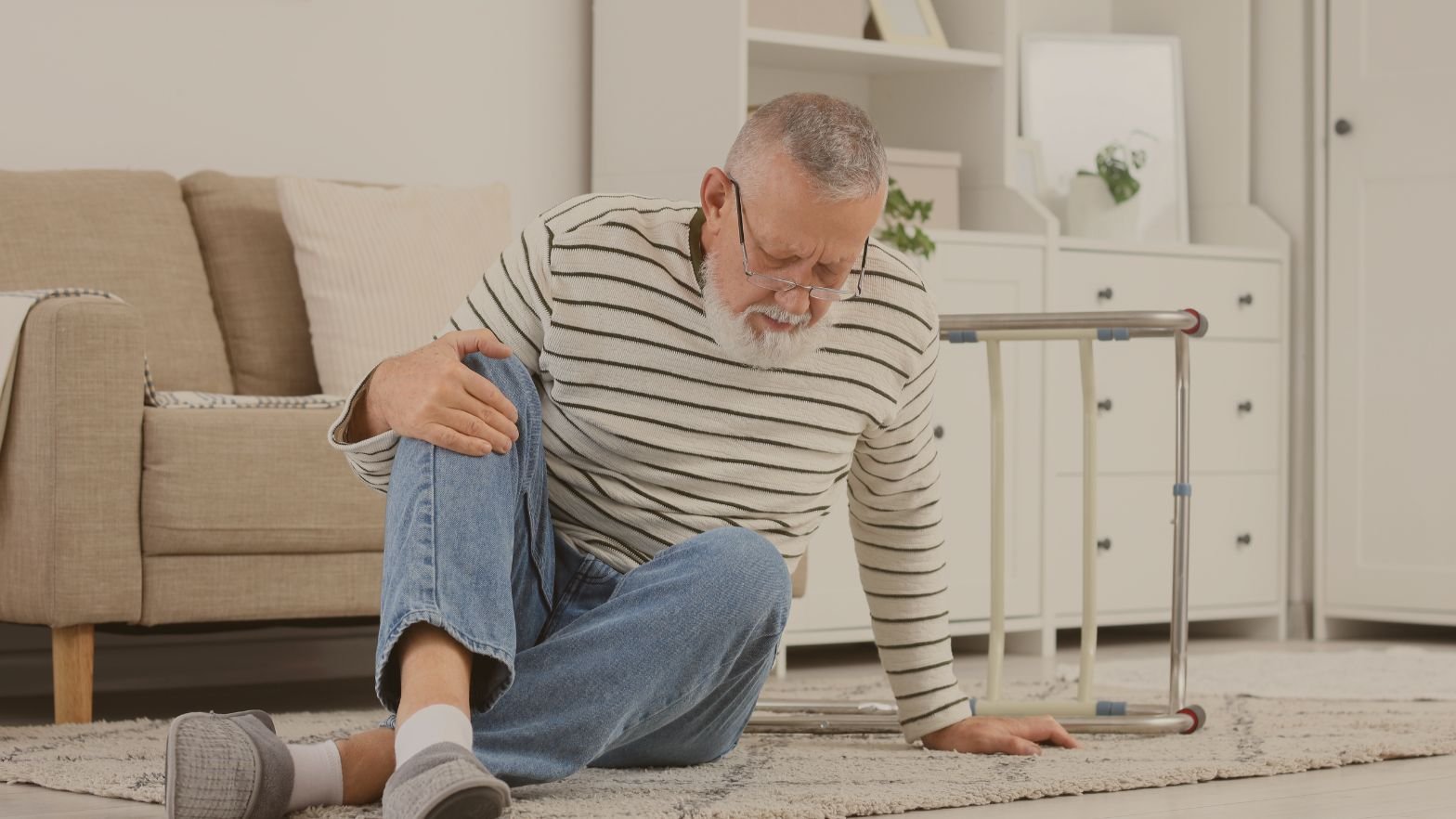
Building a movement reserve
The goal is to build what we might call a movement reserve: not simply being able to perform a task when everything is perfect, but having enough strength, control and adaptability to cope when conditions are less than ideal.
Because in real life, the floor is not always perfectly even. The lighting is not always ideal. Someone may walk past us. We may trip over something. Life is unpredictable. Our physical capacity needs to be able to adapt to that.
If you search for fall prevention exercises for seniors, you will often find these advice: stand on one leg, hold on to the counter, try to stay steady for as long as you can. Balance matters, but it is only one part of the picture.
The research points to exercise programs that combine balance, strength and functional training, and that are matched to the person doing them. Here is what that means in practice.
There is no single exercise that prevents falls
Balance is broader than standing on one leg
When single-leg standing can be a useful exercise for some people, balance training plan is the best method to see result.
What everyday stability requires
In everyday life, we need to stay stable while walking, changing direction, standing up and sitting down, going up and down stairs, shifting our weight, reaching for something, carrying an object, looking to the side, moving across different surfaces and responding to an unexpected obstacle. A good fall-prevention program therefore needs to address a range of abilities and be adapted to the individual.
What the research supports
Research particularly supports exercise programs that combine balance and functional training, often alongside strength training. A Cochrane review of 108 randomized trials with more than 23,000 participants found that exercise reduces the rate of falls.
Programs built mainly on balance and functional exercises reduced falls by about 24%, and programs that added strength training probably reduced them by about 34%.
Why leg strength matters
Strength is not simply about having “strong muscles.” For older adults, good leg strength can be highly relevant to everyday activities such as getting up from a chair, climbing stairs, walking uphill, stepping over an obstacle and responding when the body suddenly loses some of its stability.
The World Health Organization also recommends that older adults include multicomponent physical activity, with an emphasis on functional balance and strength, as part of maintaining physical function and reducing the risk of falls.
Why random exercises are not enough
Doing a few strength exercises randomly is not enough. The exercise needs to match the person’s current ability, progress gradually and have a meaningful connection to their goals and everyday life.
How balance works, and how it can be trained
The system
Balance is a complex ability. It involves information from vision, the vestibular system and sensory information from the muscles and joints, together with the brain’s ability to process that information and respond.
Ways to train balance
Because balance depends on several systems working together, it can be trained in different ways: maintaining stability, taking recovery steps when the body is pushed off balance, and, when appropriate, adding a cognitive task while moving. The goal is not to turn balance training into a test. It is to practice the abilities we actually use in everyday life.
Exercises to start with
These are examples of the kind of everyday movements a program can include. Keep a stable surface, such as a kitchen counter or a sturdy chair, within reach, and adapt each one to your own level:
Sit to stand: Getting up from a sturdy chair and sitting down again, slowly. Use your hands if you need to, and work towards needing them less. when things get easier, try to have one foot silently Infront of the other, we want to build up the to stand with one-leg.
Step-ups: Stepping up onto a low, stable step, with a rail or counter nearby for support.
Weight shifts: Standing at a counter and shifting your weight from one foot to the other, then forwards and backwards. challenge yourself with looking to the side while you do this exercise.
Heel-to-toe walking: Walking in a line, placing one foot directly in front of the other, with a wall or counter beside you.
Heel raises: Rising onto your toes while holding a stable surface, to build lower-leg strength. easy? Try with one leg calf raises.
Reaching and turning: Standing steadily while reaching for an object or turning your head to look to the side, as we do in daily life.
These are examples, there are so much more than that! this is only the beginning.
A good plan is built around your current ability and what you want to be able to do. Take a look at my online program- Fitness For Seniors, which is also suitable for people in their 40s.
Starting early and preparing for the real world
Signs worth paying attention to
It is possible to start much earlier. Difficulty getting up from a chair, feeling unstable while walking, avoiding stairs, becoming less active or experiencing increasing concern about falling can all be reasons to start paying attention. Not from a place of fear, but from a place of looking ahead.
If fear of falling is holding you back, read about: how fear of falling develops and how to break the cycle.
The environment is part of fall prevention
The environment is also part of fall prevention. Good lighting, clear walking paths and removing obstacles from commonly used areas can make everyday movement safer. When an older adult needs to move at night, it is also important to allow enough time, use available support such as a handrail and avoid rushing.
A safer environment is an important part of fall prevention. But it is not a substitute for building physical capacity.
Training online, from home
Online training makes it possible to work on strength, balance, functional movement and confidence from home, while adapting the exercises to the person’s abilities and goals. Research suggests that home-based exercise programs can also contribute to fall prevention, particularly when they include balance, functional and strength exercises.
One advantage of working remotely is that training can be integrated directly into the environment where the person lives and moves every day: practicing getting up from their own chair, working on transfers, using a stable surface for support, practicing everyday movement and gradually building confidence within their normal routine.
The changes do not have to be physical alone. Over time, people may develop greater strength and control, but also greater confidence, more willingness to move and less avoidance.
Frequently Asked Questions
What is the best exercise to prevent falls?
There is no single best exercise. The research supports programs that combine balance, functional movement and strength, matched to the person’s ability and built up gradually.
Is balance training enough on its own?
Balance training is important, but leg strength and practicing everyday tasks, such as getting up from a chair and using stairs, matter too.
Can I train for fall prevention at home?
Yes. Research suggests that home-based programs can contribute to fall prevention, particularly when they include balance, functional and strength exercises.
If you would like a program built for your own ability and goals, reach out for a free consultation.